

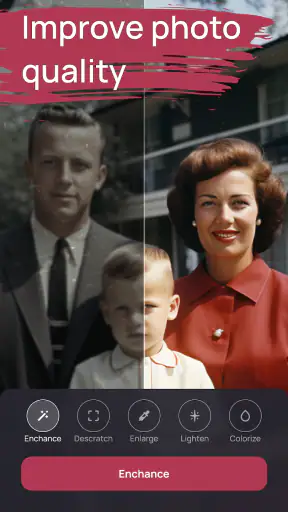
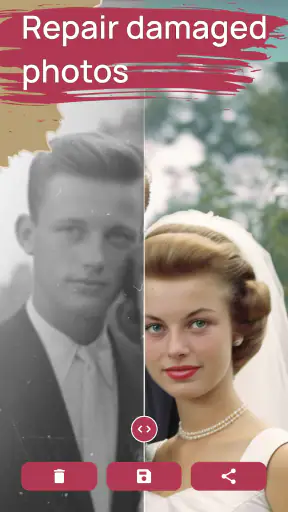
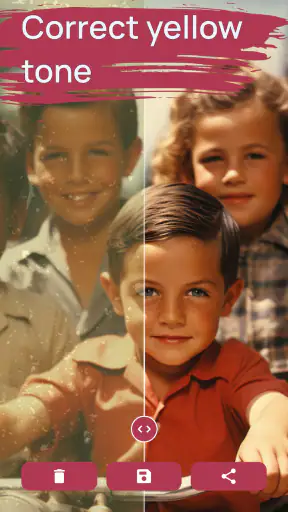
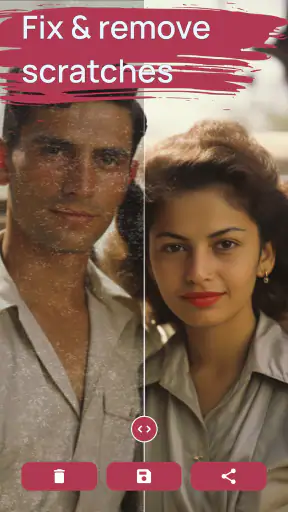
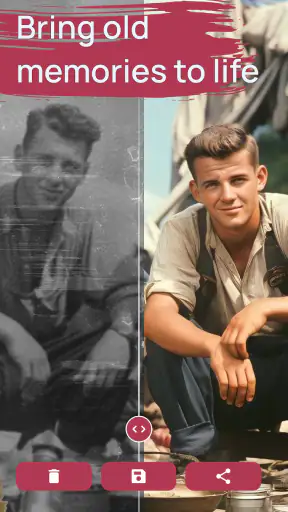
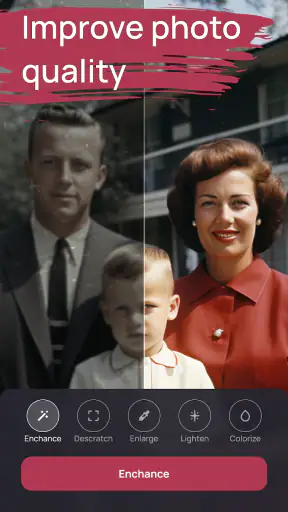
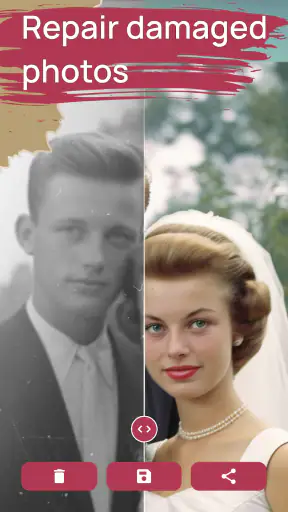
I tried FixMyPics - Restore Old Photos with the expectations I usually bring to a photo-repair app: I wanted something approachable for family pictures, useful for quick improvements, and honest about the difference between repairing a damaged image and creating a polished new version. Developed by Kallossoft, this free photography app focuses on restoring, repairing, fixing, and colorizing older pictures. That makes it especially interesting for people who have scanned prints, faded snapshots, or family images that deserve a second look without learning a full desktop editor.
My overall impression is that it is easiest to appreciate as a focused first step rather than a complete photo studio. It gives casual users a straightforward way to experiment with old images, while still leaving room for judgment after the automatic work is finished. The app is rated for Everyone, runs on Android devices using version 8.0 or later, and its current version is 2.0.5. Those details matter because the audience for old-photo restoration is often broader than experienced smartphone photographers: relatives may be sharing pictures with one another, older users may be handling the app, and some people may simply want the least complicated route from a damaged print to a more presentable image.
How the app feels to read and navigate
The strongest part of the experience is its narrow purpose. Instead of asking me to understand layers, masks, curves, or a long list of editing categories, FixMyPics is built around the idea that an old picture needs help. That focus reduces the amount of decision-making at the start. For someone who is uncomfortable with image-editing terminology, a restoration-oriented workflow is less intimidating than opening a traditional editor and wondering which tool should come first.
I also found that this kind of focused design can make the app easier to explain to another person. If a family member has a box of photographs and only wants to make them clearer or add color, I can describe the task in ordinary language rather than teaching a complete editing vocabulary. That is a genuine benefit for mixed-ability households, where one person may be confident with phones and another may not be.
There is an important distinction between simple navigation and guaranteed accessibility, though. A limited-purpose app can reduce cognitive load without automatically solving every reading or interaction need. People who rely on enlarged system text, screen readers, strong contrast, or very precise touch controls should check how the current interface behaves on their own device. I would not treat the app’s Everyone rating as proof that every visual, motor, hearing, or cognitive requirement has been covered.
For readability, I would prepare the image before opening the restoration workflow. A well-lit scan or a sharply photographed print gives the app a better starting point than a picture taken at an angle under a lamp. This is more than a quality tip: it also reduces the number of times a user has to repeat an unclear process. If the original is difficult to inspect, it becomes harder to tell whether a change improved a face, softened a scratch, or simply altered the picture in an unexpected way.
The most useful habit is to treat the first result as a preview, not as unquestionable truth. Restoration tools can make an image look cleaner while also changing small details that were never fully visible in the original. I recommend keeping the untouched picture and comparing the result at a comfortable zoom. That approach helps users who may otherwise assume that a sharper-looking face is automatically a more accurate face.
What the focused workflow does well
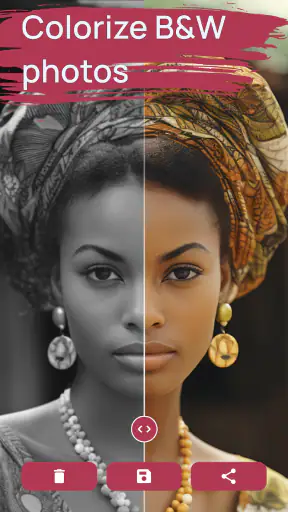
FixMyPics makes sense for a person who wants to rescue a particular photograph rather than build a large editing project. A faded portrait, a family gathering, or a black-and-white picture can be approached as a single restoration task. The colorization angle is also appealing when the emotional goal is to imagine an older moment in a more contemporary way. In my view, that is where the app has its clearest identity: it is less about artistic control and more about making neglected images easier to revisit and share.
The app has attracted over a million installs and an average rating of 4.3 from roughly fifty-seven thousand ratings. I see that as evidence that the basic idea connects with a substantial audience, not as a guarantee that every restoration will look natural. Results depend heavily on the source image. A clean, well-framed scan gives an automatic tool more useful information than a tiny, heavily compressed screenshot or a photograph with glare across the subject.
One non-obvious trade-off is that convenience can hide the need for curation. When an app performs much of the work for me, I am less likely to notice which parts of the picture are genuinely recovered and which parts are inferred. For family archives, that distinction matters. I would use the restored version for sharing, but I would keep the original scan as the reference copy and avoid treating generated color as historical evidence.
Motor and sensory considerations in everyday use
Touch-based photo work can be comfortable for many people, but it can also expose limitations that are easy to miss in a short trial. Selecting a picture, confirming an action, and comparing versions may require accurate taps. Someone with tremors, reduced dexterity, or difficulty maintaining a steady grip may find a larger phone or a stable surface helpful. I would also avoid doing delicate comparisons while walking or holding the device one-handed; the app is more manageable when the user can concentrate on the image and the controls.
For users with low vision, the source material itself may be the biggest challenge. A dark, scratched photograph is already hard to inspect, and a small phone screen can make subtle changes difficult to judge. Increasing the device’s display size or using a larger screen may help, but the practical question is whether the app’s controls remain comfortable at the user’s preferred system settings. I would test that before committing to a large batch of family photographs.
Colorization introduces a sensory and interpretive issue as well. A color result may be easier for some people to distinguish than a muddy monochrome original, but it can also create a false sense of certainty. Colors in an old image are often reconstructed rather than recovered directly. For that reason, I prefer to view colorization as an expressive enhancement. If the task is documenting clothing, objects, or historical details accurately, I would compare the colorized output with the original and consider using a more controlled editor for the final presentation.
Users who are sensitive to visual clutter may appreciate the app’s focused purpose, but any automatic result can still be visually busy if the original contains scratches, repeated patterns, or crowded backgrounds. My practical solution is to work on one image at a time and pause between processing steps. That makes it easier to notice whether the output is actually useful instead of accepting every change simply because it is new.
Situational access: when it is genuinely useful
A realistic example is a family member preparing a memorial slideshow. They may have only a phone, a folder of photographed prints, and limited time. FixMyPics can be a sensible first pass: photograph each print as squarely as possible, process the strongest originals, compare the results, and select only the versions that still look like the people and places in the source. The app is particularly convenient when the goal is a small personal collection rather than a professionally archived library.
Another useful situation is sharing restoration work between relatives with different levels of technical confidence. One person can capture the images, another can review whether faces look believable, and a third can decide which versions belong in a family album. That division of labor is valuable because automatic restoration is not only a technical task; it is also an editorial one. The person who remembers the photograph may notice an incorrect-looking detail that a purely visual workflow would miss.
The app is also a reasonable option for someone who wants to try restoration before paying for a specialist service. It is free to download, while in-app purchases range from ninety-nine cents to seventy-nine dollars and ninety-nine cents per item. I would pay close attention to the purchase screen and the exact item being offered before confirming anything, especially if a child, older relative, or shared-device user may open the app. The free entry point makes experimentation accessible, but the possible purchase range means it is worth deciding in advance how much a particular restoration is worth to you.
For a quick social post, the app may be more convenient than opening a desktop program. For a treasured original, however, I would not rely on a phone workflow alone. A professional restoration service or a detailed desktop editor is a better fit when the image will be printed at a large size, used in a book, or treated as part of a formal archive. Those alternatives usually offer more deliberate control, even if they demand more time and technical knowledge.
Three practical techniques that improve the experience
First, capture the photograph as a photograph of a flat object, not as a casual snapshot. Keep the phone parallel to the print, avoid reflections, and use even light from both sides when possible. This reduces distortion before FixMyPics has a chance to process the image. If the print is behind glass, glare can become more damaging than the original fading, so changing the angle or removing the glass when safe is often more useful than repeatedly rerunning the restoration.
Second, build a small comparison set. Instead of processing every picture in a box, choose one portrait, one group scene, and one image with visible damage. These samples reveal how the app handles faces, backgrounds, and imperfections in your own collection. If the portrait looks convincing but the group scene becomes muddy, you will know to use the app selectively rather than assuming the same approach works for every photograph.
Third, separate restoration from presentation. I would keep an untouched scan, a repaired version, and a colorized version as separate files or clearly named copies. That simple organization prevents a colorful interpretation from replacing the historical reference. It also makes it easier to share the repaired image with relatives who want a cleaner picture while preserving the original for anyone who prefers authenticity.
A fourth tip is to judge the image at two scales. At a small viewing size, the result may look excellent because the overall contrast and clarity have improved. At a closer view, facial features, hair, hands, and patterned clothing may tell a different story. Looking at both views helps me decide whether the output is suitable for a message, a digital album, or a physical print. The right result is not always the most aggressively enhanced one.
Where the app still creates friction
The main limitation is the gap between automatic convenience and precise control. If a restoration makes one part of an image better but another part stranger, I may not have the same local correction options I would expect from a full editor. That matters for photographs with mixed damage: a clear face beside a torn background, or a bright foreground beside a badly faded sky. In those cases, a specialist tool can be slower but more dependable because it lets me work on separate areas.
Another barrier is the need for visual judgment. The app can make a damaged picture look more finished, but it cannot replace the person who knows what the original scene should represent. This is especially important with family photographs, where an unfamiliar face or object may be altered without the user noticing. I would involve someone who recognizes the people whenever accuracy matters.
Large collections may also test the patience of users who want consistent results. Automatic processing is attractive for one or two images, but a whole archive needs naming, sorting, backups, and quality checks. FixMyPics can be part of that workflow, yet it should not be mistaken for an archive-management system. I would process in small groups and review each result before deleting anything or sending a batch to relatives.
People seeking advanced accessibility customization should be cautious about assuming that a focused interface will meet their needs. The app’s age rating makes it broadly suitable in content terms, but content suitability and interface accessibility are different questions. If a user depends on specific assistive settings, the sensible approach is to test a representative image first and confirm that selecting, reviewing, and saving results are all comfortable.
Who should use it, and who should choose something else
I would recommend FixMyPics to casual users, families, and anyone who wants a low-friction introduction to old photo restoration. It is a good match when the desired outcome is a cleaner, more shareable image and the user is willing to review the result rather than accept it automatically. The free starting point also makes it practical for testing a few meaningful photographs before deciding whether additional paid items are worthwhile.
I would be more selective for professional photographers, archivists, and users who need exact control over every damaged area. They may prefer a desktop editor, a dedicated scanning workflow, or a restoration specialist. The same is true for anyone who needs color to be historically defensible rather than visually appealing. FixMyPics can create a persuasive interpretation, but persuasive is not the same as documented.
It is also not my first choice for ordinary modern photo editing. If I only need cropping, exposure correction, typography, or detailed retouching, a general-purpose editor is likely more appropriate. This app earns its place when the starting point is old, faded, damaged, or monochrome imagery—not when the picture is already in good condition and needs routine social-media adjustments.
Because it is maintained by Kallossoft and has reached a broad audience, the app feels like a credible option for personal experimentation. Still, I would keep expectations proportional to the source material and the task. No automatic restoration can reconstruct every missing detail faithfully, and no interface can remove the need to decide whether the final image still represents the original memory.
In the end, I see FixMyPics as an approachable bridge between a forgotten photograph and a usable digital keepsake. Its focused photography workflow lowers the entry barrier, its restoration and colorization tools suit family projects, and its free availability makes trying it straightforward. The best results come from careful image capture, side-by-side checking, and preserving the original alongside every edited copy.
My inclusive verdict is positive, with a clear condition: use it as an accessible starting point, not as an automatic authority. People who value simplicity and need help with a small set of old pictures will probably find it friendly and worthwhile. Users who require highly customized controls, exact historical accuracy, or professional finishing should look beyond it. For everyone in between, a short test with representative photographs will quickly show whether its balance of convenience and control fits their needs.


